
Mar 31, 2026
Payload Matching Matrix: The Ultimate UK Survey Guide
Choosing a sensor based on a datasheet is a bit like buying a car based on its top speed—it tells you nothing about how it handles a flooded B-road in North Yorkshire. In the UK survey sector, the real "specs" that matter are vegetation penetration through dense bracken and whether the kit survives a sudden coastal drizzle.
The Quick-Match Matrix
Matching your sensor to the specific task is the fastest way to protect your margins and ensure data quality. Using a high-end LiDAR unit for a simple volumetric stockpile survey is overkill, while relying on photogrammetry for a forested flood model is a recipe for a costly re-flight. Use the table below to align your mission requirements with the current 2026 hardware ecosystem.
| UK Task | Primary Goal | Recommended Sensor | Platform |
| Stockpile Volumes | Fast, high-res ortho | Zenmuse P1 | M350 / M400 |
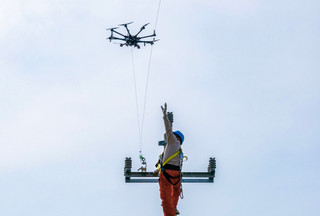
| Powerline Sag | Thin wire detection | Zenmuse L3 | M400 Exclusive |
| Flood Modelling | Ground classification | Zenmuse L3 | M400 Exclusive |
| Night SAR/Security | Thermal & Spotter | Zenmuse H30T | M350 / M400 |
| General Topo | Cost-effective LiDAR | Zenmuse L2 | M350 / M400 |
LiDAR Evolution: L2 vs. The New L3
The jump from the Zenmuse L2 to the L3 isn't just a spec bump; it is a fundamental shift in how we handle UK terrain. While the L2 is a reliable workhorse for many, the L3 introduces "16 returns" per pulse. In plain English, this means the laser has sixteen chances to find a gap through dense canopy or overgrown scrub to hit the actual ground.
For surveyors working in the Scottish Highlands or dense Welsh forestry, those extra returns are the difference between a "fuzzy" digital surface model and a pinpoint accurate digital terrain model. The L3 also pushes vertical accuracy to a staggering 3cm at 120m, effectively halving the point cloud thickness seen on the L2. If your contract requires sub-5cm RMSE on complex terrain, the L3 is no longer optional.
Weather Resilience: The "Drizzle" Factor
The British weather is the single biggest threat to your project timeline. Most legacy sensors stayed in the box the moment a cloud looked threatening, but the current enterprise lineup is built for the "damp." Both the Zenmuse H30T and the L3 carry an IP54 rating, meaning they are protected against dust ingress and water spray from any direction.
Pairing these with the IP55-rated Matrice 400 allows you to push the operational envelope. You can now realistically complete an inspection in standard UK light rain without risking a multi-thousand-pound short circuit. This reliability reduces "stand-by" days for your crew and makes your delivery dates significantly more believable to your clients.
Hardware Compatibility: M350 vs. M400
The transition to the Matrice 400 platform has created a clear divide in payload compatibility. While the M350 RTK remains a stellar platform for the Zenmuse P1 and L2, the high-performance L3 is built exclusively for the M400’s upgraded power rails and data bus.
-
Matrice 350 RTK: Best for P1 (Photogrammetry), L2 (Entry LiDAR), and H30T (using RC Plus).
-
Matrice 400: Required for L3 (High-end LiDAR). Supports up to seven simultaneous payloads including the H30T and S1 Spotlight.
Managing the Data Load
High-return LiDAR and 100MP dual-camera systems generate a massive amount of "admin debt" if you aren't prepared. Capturing 2 million points per second with the L3 is impressive, but you still need to prove to the CAA that the flight was conducted within your OA limits. Dronedesk simplifies this by allowing you to record your flight logs and hardware usage directly, ensuring that even as your sensors get more complex, your compliance remains automated.
Ready to upgrade your data or need a specialist sensor for a Tier 1 contract? Explore our full range of DJI Enterprise Payloads to find the perfect LiDAR, thermal, or mapping solution for your next mission.