
May 8, 2026
'LiDAR Wars: Zenmuse L3 vs L2 for UK Topographical Surveys
Struggling to find the ground through a thick canopy of Scottish pine or dense southern gorse is a frustration every UK surveyor knows too well. You spend hours on-site only to realize during post-processing that your point cloud looks more like a solid green wall than a topographical map. While the Zenmuse L2 was a significant step up from its predecessor, the arrival of the Zenmuse L3—designed for the Matrice 400—promises to finally solve the "vegetation problem" that plagues British survey sites
The 1535nm Difference: Punching Through the Green
The most critical hardware shift in the Zenmuse L3 is the move to a 1535nm laser wavelength. Traditional LiDAR sensors often struggle with moisture and specific types of foliage common in our temperate climate. This new wavelength, combined with a significantly smaller laser spot size (roughly 1/5th the size of the L2), allows the beam to find tiny gaps in leaves and branches that older sensors simply hit and reflected off
In practice, this means more pulses reach the actual terrain. If you are working on a Tier 1 rail project or a new housing development on a "brownfield" site covered in overgrowth, this increased penetration is the difference between a usable DTM (Digital Terrain Model) and a wasted day in the field. The L3 doesn't just collect more data; it collects the right data from the ground up
Returns and Range: Mapping the Impossible
With a massive jump to 16 returns, the L3 is built to slice through layers of complexity. While the L2’s 5-return system was respectable for standard work, it often fell short in ancient UK woodlands where multiple canopy layers exist. The L3’s ability to record 16 separate reflections for every pulse ensures that even in the most vertical, multi-story vegetation, you are capturing the understory and the true earth surface
-
Extended Reach: The L3 offers a 20% increase in detection range compared to the L2, making it safer to operate at higher altitudes over uneven terrain
. -
High-Density Clouds: By firing more pulses per second, the sensor generates a much denser point cloud, providing the granular detail needed for BIM (Building Information Modelling) and high-accuracy earthworks
. -
Efficiency Gains: The M400's 59-minute flight time, paired with the L3, allows you to cover significantly more ground per battery cycle than an M350/L2 setup
.
Hardware Utility in the Field
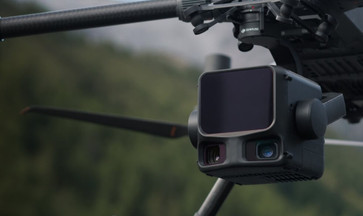
The L3 is not just a sensor; it’s a complete survey-grade solution that integrates seamlessly with the Matrice 400 ecosystem. It includes a built-in high-accuracy IMU (Inertial Measurement Unit) that requires no warm-up time, allowing you to get the aircraft in the air and mapping in minutes
The sensor also carries a 4/3 CMOS RGB camera with a mechanical shutter. This means you aren't just getting a point cloud; you are getting perfectly colorized data and high-resolution photogrammetry in a single pass
Mastering the Admin: Beyond the Point Cloud
Collecting high-grade LiDAR data is only half the battle; proving you did it safely and legally is what keeps your business running. While the L3 and M400 handle the heavy lifting in the sky, the administrative burden of enterprise-scale surveying can quickly become a bottleneck. The CAA doesn't care how dense your point cloud is if your flight logs are a mess and your risk assessments are outdated.
Dronedesk allows you to manage every aspect of your drone operations in one app, from initial site planning to final flight logging. It helps you increase your team's safety and productivity by automating the compliance tasks that usually eat up your evenings. By keeping extensive, centralized records of your LiDAR missions, you can breeze through your next CAA audit without the typical "night-before" panic.
Is the Upgrade Worth the Investment?
For firms primarily doing urban surveys or stockpile measurements, the L2 remains a potent and cost-effective tool. However, if your business is expanding into environmental monitoring, forestry, or complex infrastructure projects where vegetation is a constant hurdle, the L3 is the clear winner. The ROI comes from the reduction in "re-flights" and the significantly lower time spent cleaning up noisy data in the office.
The Matrice 400 and Zenmuse L3 combo is currently the most advanced mapping tool available for the UK professional. It’s built to handle our weather, our terrain, and our rigorous safety standards.
Get the Precision your Surveys Demand
If you are ready to stop fighting with foliage and start delivering cleaner, more accurate topographical data, the Zenmuse L3 is the answer. We have the latest LiDAR payloads and M400 airframes in stock, backed by the technical expertise to ensure you get the best out of your new hardware from day one.