
Jun 26, 2026
LiDAR vs Photogrammetry: Payloads for UK Historic Building Conservation
The Reality of Structural Heritage Tenders in the UK
Operating a large multi-sensor platform within 15 metres of a Grade I listed mediaeval structure is an exercise in managing thin margins. If you scratch a 12th-century stone lintel with a carbon-fibre propeller, you are not just looking at an expensive insurance claim. You are looking at structural asset damage to a piece of protected national history, a massive civil penalty, and the immediate suspension of your Operational Authorisation by the Civil Aviation Authority (CAA). Heritage organizations like Historic England and National Trust demand absolute precision before they let you unpack a flight case on their grounds.
Commercial operators regularly face a technical fork in the road when bidding for these high-value asset surveys. Do you deploy a laser-scanning system to pierce through centuries of ivy growth and capture clean structural geometry, or do you rely on full-frame imagery to map structural decay and surface cracking? The answer dictates your choice of payload, processing times, and field deployment costs.
Westering light, damp British air, and complex stonework geometry change how manufacturer specification sheets perform in the field. Let us look at how the latest enterprise hardware stacks up on a real historic asset survey.
The Cynic Analysis of the Zenmuse L3 LiDAR System
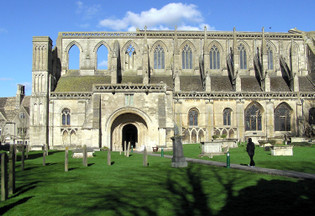
The product documentation for the Zenmuse L3 claims a maximum ranging capability of up to 950 metres on targets with 10% reflectivity. While that number looks brilliant in a boardroom presentation, it is a complete fantasy when you are standing in a damp valley in Wiltshire trying to scan a crumbling priory wall. In typical British dampness, airborne moisture scattering reduces your reliable, high-density return range significantly. You can expect closer to 150 to 200 metres of clean, repeatable point data when you need sub-centimetre accuracy.
The real strength of this payload is not the total distance it flies from the target. The true commercial value lies in the massive upgrade to a 1535nm wavelength laser combined with up to 16 returns.
-
Canopy penetration: The multiple return system allows the system to easily filter out decades of overgrown vegetation, brambles, and thick ivy to find the genuine stone surface beneath.
-
Ranging repeatability: You achieve a 5mm ranging repeatability at 150 metres altitude, meaning your raw geometric model avoids the thick fuzzy data layers common with older sensors.
-
Data collection speed: Generating up to 2 million points per second lets you execute rapid flight patterns while capturing intricate lead flashing, gargoyles, and narrow window tracery.
-
Memory infrastructure: The system switches away from standard micro-SD storage to high-speed CFexpress Type B cards, allowing massive point cloud files to write instantly without buffering errors.
Freezing winds coming off the hills will turn your fingers numb while you lean over a vehicle tailgate trying to swap out these high-capacity memory cards. If you push the flight platform too fast through a complex architectural path, the point cloud thickness will spread out, ruining your point density. Keeping your speed around 4 to 5 metres per second is the only way to guarantee the spatial data remains tight enough for a forensic engineering report.
Explore the full technical specifications of the latest enterprise systems and find the right setup for your business on the
. Dronedesk Shop
Splitting Fine Cracks with the Zenmuse P1 Full Frame Photogrammetry Payload
Photogrammetry operates on a completely different physical principle, relying on raw optical resolving power rather than raw laser pulses. The Zenmuse P1 carries a massive 45-megapixel full-frame sensor mounted on a highly responsive 3-axis stabilized gimbal. When your structural client is demanding an accurate assessment of mortar decay, stone spalling, or micro-fracture progression over a six-month timeline, imagery wins over data points every single day.
Lenses matter more than software algorithms when you are targeting a crumbling cathedral spire. The P1 allows you to swap between 24mm, 35mm, and 50mm global mechanical shutter lenses, which completely eliminates the rolling shutter jello effect during rapid movements.
-
Pixel-level resolution: Flying the full-frame system at a safe distance allows you to achieve a ground sample distance down to less than 1mm per pixel on vertical facades.
-
Color accuracy: The absolute clarity of the RGB sensor allows preservation specialists to identify chemical leaching, moss dampness, and rust staining caused by failing iron ties inside the masonry.
-
Mechanical shutter durability: The mechanical shutter triggers at 1/2000 of a second, which locks each frame in place with pinpoint sharpness.
-
Data synchronization: TimeSync 2.0 aligns the camera shutter, the RTK positioning module, and the flight controller at the microsecond level, giving you centimetre accuracy without needing dozens of physical ground control points.
Consider the ambient light before choosing this payload. If the sky cloud cover turns thick and gray over a Yorkshire abbey, your image contrast drops, forcing your post-processing software to struggle with stitching errors on uniform limestone faces. Photogrammetry also creates massive processing hangovers, requiring your office workstation to chew through 3,000 high-resolution images for days just to render a clean 3D mesh.
Choosing the Weapon for the Masonry
The choice between these two premium systems comes down to the specific preservation deliverable your client is funding. If the statement of work asks for a precise topographic volume calculation of an overgrown ruined castle mound, photogrammetry will make you want to rip your hair out. The camera cannot see through the leaves, meaning your final digital elevation model will just map the top of the bush canopy.
LiDAR cuts straight through the green fluff to register the true dirt profile and structural floor footprint in a single afternoon.
Conversely, if the conservation architect needs a true-to-life digital twin to show donors stained-glass degradation or timber rot in roof trusses, raw laser scans look like an abstract wireframe ghost. The full-frame photogrammetry system generates gorgeous, photorealistic texturing that makes client presentations look flawless.
Many advanced operators are now combining both methodologies on complex jobs, using the laser data for the overall structural skeleton and overlaying full-frame imagery to handle surface inspection details.
The Administration Hangover of Heritage Projects
Planning a multi-payload commercial flight inside a sensitive historical environment produces an incredible mountain of compliance paperwork. You cannot simply turn up with a flight case, calibrate your compass on the grass, and lift off. You have to prove to the estate managers that you have cross-referenced your flight path against local ground hazards, public footpaths, livestock boundaries, and nearby architectural constraints.
A single complex heritage site plan can easily drain four to five hours of unbillable admin time if you are stuck copying data across disjointed spreadsheets, weather sites, and aviation charts.
Save hours of manual pre-flight admin and build professional, CAA-compliant flight plans with
. Dronedesk Flight Planning Software
Dronedesk completely sanitises this workflow by pulling your mandatory airspace checks, live flight restriction zone data, and local weather forecasts into a single web-based screen. You can construct a detailed risk assessment using pre-saved heritage templates, altering the specific risk scores based on vertical stone stability or public visitor numbers on the day.
The software automatically syncs your DJI enterprise hardware records, tracking battery station cycles for your Matrice platforms and log data without manual entry. When you hand a polished, professional job pack over to a property management committee, it instils immediate confidence in your operational professionalism.
Setting Up Your Technical Workflow
Step-by-Step Methodology for Heritage Data Integration
-
Pre-flight validation: Check the live system logs and assign your specific airframe and primary sensor combinations within your digital operations manager before traveling to the location.
-
Base station coordination: Plant your RTK base station on a known survey monument or use a reliable network RTK stream to ensure the spatial accuracy matches your structural grid requirements.
-
Flight execution priority: Use automated terrain-following modes to maintain a constant distance from the masonry faces, accounting for sudden vertical elevation changes across older structures.
-
Field quality verification: Utilize the live point cloud view or low-res image playback on your remote controller before packing up your gear to confirm that no shadow zones or data gaps exist.
-
Post-processing integration: Import your raw laser data or high-resolution imagery into processing platforms to finalize your multi-layered client deliverables.
Elevating Your Conservation Services
Operating in the high-tier UK survey market means treating your business like an aviation company rather than a photography studio. Your hardware choice, data processing precision, and regulatory compliance are the three legs of the stool that support your commercial pricing. Clients will gladly pay premium day rates when they know your flight operations are backed by data integrity and thorough safety records.
Investing in top-tier payloads means nothing if your back-office systems are a shambles of loose paper and forgotten battery logs. Streamline your enterprise business from the ground up to protect your margins, your hardware, and our historic architecture.
Upgrade your enterprise asset fleet at the
and get your operational compliance sorted today by signing up for Dronedesk Flight Planning Software. Dronedesk Shop