
Jun 4, 2026
DJI Zenmuse S1 Spotlight: The Essential Guide for UK Commercial Drone Operations
What is the true cost of an enterprise payload that sits in your flight case because it is too cumbersome to deploy when a critical nighttime mission lands on your desk?
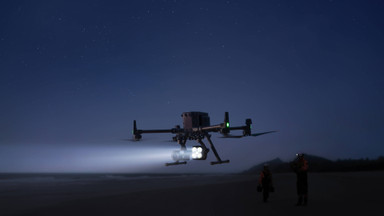
For UK drone operators managing Tier 1 utility contracts or executing rapid search and rescue deployments, hardware complexity is the ultimate friction point. The arrival of the DJI Zenmuse S1 drone spotlight changes that calculation entirely, moving tactical illumination out of the realm of finicky third-party integrations and directly into the core DJI enterprise ecosystem.
This review examines the technical realities, operational advantages, and return on investment of the Zenmuse S1 payload for commercial remote pilots working within the Civil Aviation Authority framework.
Technical Specifications: Beyond the Marketing Lumens
Commercial operations in the British Isles demand precision data over vague marketing specifications. The Zenmuse S1 utilises advanced Liquid Emission Pumping technology to deliver targeted, stable illumination that directly interacts with the primary sensor array.
Unlike traditional LED arrays that scatter light indiscriminately, the LEP core inside the Zenmuse S1 focuses its energy into a tightly managed beam, allowing for enhanced light penetration through moisture, fog, and typical British downpours.
| Metric | Specification | Operational Implication |
| Compatible Airframes | Matrice 400, Matrice 350 RTK, Matrice 300 RTK | Cross-compatibility simplifies mixed enterprise fleet management. |
| Max Power Output | 32W | Minimises battery draw, protecting flight times. |
| Illuminance @ 50m | 17±0.2 lux | Provides clear, identifiable visual details on structural targets. |
| Illuminance @ 100m | 4.3±0.2 lux | Enables effective vehicle and suspect tracking from a safe altitude. |
| Effective Beam Angle | 23° (at 10% relative illumination) | Matches the field of view of standard enterprise telephoto cameras. |
| Controllable Tilt Range | -90° to +35° | Offers complete vertical freedom, matching camera movement. |
| Ingress Protection | IP55 rated | Built to handle predictable UK coastal mist and steady drizzle. |
Tactical Lighting Modes for Complex UK Environments
The Zenmuse S1 does not simply turn on and off. It offers distinct operating states tailored to the operational demands encountered by first responders and infrastructure engineers.
Low Beam Mode: Short-Distance Structural Assessment
Low Beam Mode optimizes wide-area coverage at close proximity. It projects a stable 15° field of view within a 150-metre envelope. This operating state is designed to align with a visual payload operating at a 5x zoom factor or above. It is the default option for close-quarters asset inspection, such as tracking masonry defects along rail corridors or assessing structural damage on offshore infrastructure.
High Beam Mode: Extended Range Tracking
High Beam Mode concentrates the LEP module energy for deep penetration. When working from a safe altitude or managing an expansive operations area, this state maximizes central illuminance. It allows pilots to isolate and identify targets from significant stand-off distances, keeping the aircraft well clear of local terrain or physical obstructions.
Dual Illumination & Strobe Mode
Engaging both beams simultaneously delivers a comprehensive field of view while preserving maximum central intensity. For emergency nighttime repairs or tactical security patrols, this combined state ensures that the immediate target area is fully saturated while maintaining situational awareness of the surrounding terrain. The tactical strobe function provides an unmistakable visual indicator for ground crews or emergency services coordinating an active response on-site.
Hardware Integration and Fleet Management
The Zenmuse S1 interfaces natively with the DJI SkyPort V2 and E-Port systems. This eliminates the need for independent external power blocks or separate control receivers. The aircraft automatically detects the payload upon startup, displaying illumination controls natively within the DJI Pilot 2 interface.
Gimbal Linkage: Automated Targeting
The payload features a built-in three-axis gimbal with an alignment accuracy of ±0.1°. The hardware can be linked directly to follow primary camera movements automatically. When the pilot manipulates the left or right dials on the DJI RC Plus or RC Plus 2 controller to pan or tilt the camera view, the Zenmuse S1 responds at speeds up to 120°/s. This ensures that the illuminated region matches your sensor field of view without needing manual adjustments from a secondary payload operator.
Mounting Versatility
The physical installation uses quick-release, hand-tightened screws that speed up deployment in changing conditions.
-
Matrice 400 Framework: Can be deployed across the lower single, dual, or third gimbal connector locations. If you are configuring a heavy-lift tactical setup, note that exceeding a 950g payload weight on a single lower connector reduces the standard gimbal damper lifespan from 1,000 hours down to 400 hours. Because the Zenmuse S1 weighs significantly less than this threshold, it can be flown continuously alongside heavy multi-sensor payloads like the Zenmuse H30T without causing premature component wear.
-
Dual-Payload Tandem Work: The hardware is optimized to fly in tandem with the Zenmuse V1 drone speaker. Combined via a dual lower connector, these two payloads give emergency services a unified communication and illumination toolkit, all controlled from a single remote control screen.
Compliance, Safety, and the Admin Headache
Operating high-power illumination systems at night in the UK involves distinct regulatory requirements. The Civil Aviation Authority maintains strict standards under CAP 722 regarding nighttime operations, pilot currency, and risk mitigation.
Risk Management and Dronedesk Integration
Deploying an LEP light source requires updating your operational documentation. Using Dronedesk allows you to build a comprehensive risk assessment that accounts for nighttime illumination hazards.
Through the platform's unified interface, you can pre-configure specific SORA or standard risk assessment templates that address core tactical considerations:
-
Managing dazzling hazards to nearby transport networks or rail lines.
-
Maintaining precise aircraft position tracking when standard visual line of sight distances become obscured by darkness.
-
Ensuring the internal aircraft beacon remains visible against the glare of the primary payload.
Operational Note: To maintain full compliance with the UK Interface Requirement IR2030, ensure your enterprise fleet is running the latest firmware packages. Dronedesk automatically alerts fleet managers to new firmware updates directly on the main dashboard, ensuring that your equipment conforms to current CAA-approved standards before the team arrives on-site.
Tracking Payload and Battery Cycles
A high-intensity light source puts a unique strain on your platform's power distribution. While the Zenmuse S1 uses an efficient 32W draw, operating at low temperatures requires monitoring your battery health.
Dronedesk simplifies this by syncing directly with your DJI Enterprise account. The platform tracks your flight logs and cell cycles automatically. This ensures that the heavy-duty intelligent flight batteries powering your low-light flights are systematically monitored for degradation, preventing power issues before they happen on a live operation.
Is the Zenmuse S1 Right for Your Fleet?
The decision to add the Zenmuse S1 to your commercial equipment pool depends on your primary contracts. For businesses focused on daylight photogrammetry or standard agricultural mapping, the investment is hard to justify.
However, if your business operates in industrial asset inspection, railway corridor security, coastal search and rescue, or police support, this payload provides a clear operational advantage. It removes the custom scripting, separate power connections, and calibration routines that made early drone spotlight integrations unreliable.
The payload delivers dependable illumination, fits standard industrial airframes, and operates via the software your team already uses every day.
Are you looking to integrate the Zenmuse S1 into your operations or want to see how Dronedesk can simplify your CAA compliance management?