
Aug 17, 2026
Bypassing Urban Transmission Constraints: Deploying the DJI Cellular Dongle 2 and Airborne Relay
Signal degradation caused by urban reflection, steel reinforcement and non-line-of-sight obstacles costs UK commercial operators thousands of pounds in aborted flights and lost operational hours. When conducting structural inspections or security mapping in dense metropolitan areas, radio frequency interference routinely forces emergency return-to-home procedures. Deploying dual-link redundancy using cellular connectivity and physical airborne relays ensures continuous control links, protecting client deadlines and airframe investments.
Understanding the mechanical limitations of traditional radio transmission is necessary to build effective mitigation strategies.
Why Do High-Rise Urban Structures Disrupt Commercial Drone Transmission Signals?
Direct line-of-sight radio signals degrade rapidly in urban environments due to physical diffraction, multipath interference and high ambient electromagnetic noise. Concrete structures containing heavy steel rebar create severe physical barriers that block direct O4 Enterprise transmission waves. Multipath interference occurs when radio signals bounce off glass facades and metallic surfaces, causing the remote controller to receive delayed phase-shifted signals.
High-density urban areas also contain intense ambient radio frequency clutter from Wi-Fi routers, industrial telemetry and mobile mast arrays. Operational data shows that direct point-to-point links lose signal strength within seconds of an airframe moving behind a structural edge.
Standard flight planning must account for these propagation losses before launching operations near complex infrastructure.
-
Fresnel Zone Intrusion: Physical obstacles entering the elliptical radio signal path between remote controller and aircraft reduce total throughput and increase latency.
-
Multipath Signal Reflection: Bounced radio waves interfere with the primary transmission wave, generating signal jitter and frame rate drops on the Pilot 2 feed.
-
Attenuating Construction Materials: Reinforced concrete, steel cladding and low-emissivity glass attenuate 2.4 GHz and 5.8 GHz signal frequencies by as much as 20 dB to 30 dB.
-
Electromagnetic Noise Floors: Metropolitan areas frequently exhibit high background noise floors that suppress weak control signals during low-altitude operations.
When direct radio links fail, physical hardware redundancy becomes mandatory for continuous operation.
How Does the DJI Cellular Dongle 2 Maintain Continuous 4G Signal Redundancy?
The DJI Cellular Dongle 2 integrates 4G cellular networks directly into the O4 Enterprise transmission pipeline to maintain control links when direct radio lines of sight are severed. By switching automatically between direct O4 radio signals and encrypted 4G cellular data routes, the aircraft maintains seamless telemetry and high-definition video feeds. This hybrid transmission architecture eliminates the traditional single point of failure inherent in direct RF links.
Field deployments reveal that 4G integration allows pilots to maintain active control even when operating on the opposing side of massive commercial buildings. The cellular dongle attaches into dedicated expansion slots on airframes such as the Matrice 4 Series and Matrice 400.
When deploying cellular redundancy, network selection and hardware setup directly dictate link reliability.
-
Adaptive Protocol Switching: The transmission system evaluates signal quality in real time, automatically routing telemetry through 4G when O4 RF signal strength drops below operational thresholds.
-
Dual SIM Network Redundancy: Fitting internal nano-SIM and external dongle cards allows multi-carrier connectivity across networks such as EE, Vodafone and O2.
-
Low-Latency Video Streaming: High-efficiency H.265 compression maintains responsive live video feeds with minimal glass-to-glass latency over commercial 4G infrastructure.
-
Private Cloud Data Routing: Cellular data streams through AWS servers compliant with ISO 27001 standards, preventing unauthorized data syncing to external third-party servers.
-
Hardware Mounting Requirements: Mounting the dongle securely using official brackets ensures weather-sealing integrity and maintains the IP55 ingress protection rating.
Cellular networks provide excellent coverage, but remote or congested urban canyons occasionally demand an alternative physical link solution.
What Is Airborne Relay Video Transmission and How Is It Configured in the Field?
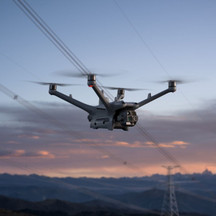
Airborne Relay Video Transmission uses a secondary high-altitude airframe as an active signal repeater to bridge communications between the ground controller and the primary operational aircraft. Operating a dedicated relay platform in clear line of sight above local obstructions allows the low-altitude inspection drone to manoeuvre behind structures or below street level. The high-altitude aircraft automatically tracks the position of the working drone, maintaining directional antenna orientation without pilot intervention.
This dual-aircraft configuration solves transmission loss in environments where 4G signals suffer from urban canyon shadowing or network congestion. Systems such as the Matrice 400 and Matrice 4 Series support airborne relay routing natively within the DJI Pilot 2 interface.
Executing a successful relay flight requires strict adherence to physical positioning parameters and battery management protocols.
-
Relay Positioning Heights: The secondary relay drone hovers at a high altitude within direct line of sight of both the remote controller and the working airframe.
-
Adaptive Antenna Alignment: An onboard eight-antenna array dynamically adjusts signal beamforming to maintain maximum throughput toward the working aircraft.
-
Autonomous Tracking Sequences: The relay platform automatically adjusts its yaw and gimbal angles to follow the primary aircraft during complex structural passes.
-
Power Management Constraints: Secondary relay aircraft consume battery power faster due to stationary hovering, requiring synchronized battery swap intervals.
-
O4 Frequency Allocation: The system automatically segregates control and relay frequencies to prevent mutual channel interference between the two airframes.
Managing dual-aircraft operations creates operational complexity that directly affects regulatory risk profiles.
How Do Dual Transmission Protocols Impact UK CAA Operational Authorisations?
Integrating cellular redundancy and airborne relays allows operators to lower intrinsic Ground Risk Classes (iGRC) and Air Risk Classes (ARC) during CAA SORA risk assessments. Under Civil Aviation Authority Specific Category frameworks, demonstrating reliable containment and redundant command-and-control (C2) links simplifies the approval process for urban operations. Eliminating lost-link scenarios reduces the calculated Ground Risk Buffer size required under JARUS SORA v2.5 guidelines.
Regulatory compliance requires documenting exact loss-of-signal mitigations within your company Operations Manual and site-specific risk assessments. The CAA scrutinizes C2 link integrity when evaluating applications for Beyond Visual Line of Sight (BVLOS) or urban operations.
Key regulatory factors must be addressed when filing safety cases for multi-link missions.
-
Ground Risk Buffer Calculations: Maintaining active signal links prevents unexpected fly-aways or uncontrolled Return-to-Home triggers, permitting smaller lateral safety buffers.
-
C2 Link Failure Mitigations: Demonstrating dual-path redundancy satisfies SORA containment requirements, proving the aircraft will not breach its Contingency Volume.
-
Operating Altitude Limits: The secondary relay aircraft must remain within the authorized operational ceiling, requiring airspace coordination if flying above standard 400 ft AGL limits.
-
GVC Separation Distances: Operating heavier platforms like the Matrice 400 near uninvolved people requires valid GVC qualifications and formal Operational Authorisation.
-
Emergency Procedure Standardisation: Pre-programmed loss-of-link behaviors must define whether the primary aircraft hovers, ascends or returns to home if both O4 and 4G links fail simultaneously.
Documenting these intricate C2 link safety protocols manually creates administrative friction for growing commercial fleets.
How Does Automated Flight Management Software Streamline Multi-Link Mission Planning?
Automated management platforms digitize risk assessments, automate CAA compliance logs and track multi-airframe battery wear across complex dual-transmission missions. Managing two airframes, cellular SIM subscriptions and complex site geography requires centralized oversight to prevent operational errors. Flight management software eliminates manual paperwork by auto-populating site safety data, air traffic notices and equipment service logs.
Using specialized software ensures every pilot, payload and cellular dongle remains fully compliant with fleet maintenance schedules. This administrative automation turns complex multi-drone deployments into standardized, repeatable commercial services.
Modern flight management software solves key operational pain points for enterprise operators.
-
Automated SORA Calculations: Integrated tools calculate Flight Geography, Contingency Volume and Ground Risk Buffers automatically based on airframe weight and speed parameters.
-
Real-Time Airspace Checking: Instant queries against Flight Restriction Zones (FRZs), NOTAMs and local hazard databases identify airspace risks before arriving on site.
-
Fleet Maintenance Tracking: Automated flight logging records motor hours, battery cycle counts and cellular dongle firmware statuses to ensure airworthiness.
-
Client-Ready RAMS Generation: Generating professional, branded risk assessment documents establishes commercial credibility with enterprise asset managers.
-
Pilot Currency Administration: Centralized databases monitor pilot qualifications, GVC expiry dates and flight hour logs across your entire operational team.
Bypassing urban signal constraints requires pairing advanced hardware redundancy with structured operational administration. Equipping your fleet with the DJI Cellular Dongle 2 and Airborne Relay capabilities solves signal loss issues, while centralized management software keeps your business compliant and profitable.
Build a safer, more efficient commercial drone enterprise. Source enterprise airframes and accessories at Dronedesk Shop and manage your operational compliance effortlessly with Dronedesk Software.