
Jul 6, 2026
Charging Enterprise Drone Fleets Remotely: Is the DJI Power 1000 Worth the Weight for UK Operators?
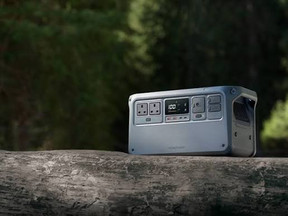
Is dragging a 13kg lithium iron phosphate battery across a waterlogged construction site in Yorkshire ever a good idea? Commercial drone operators frequently face the harsh realities of remote power management. Relying on loud, emission-heavy petrol generators or running your van engine for hours with an expensive inverter setup introduces serious equipment risks. The DJI Power 1000 has stepped into this field, offering 1,024 watt-hours of silent, portable power designed specifically for fast-charging enterprise battery stations.
Pulling Apart the Marketing Specs on In-Field Charging
Manufacturer spec sheets are notorious for quoting performance metrics captured under pristine laboratory conditions. Their marketing claims do not reflect the biting wind or low temperatures encountered during infrastructure inspections in Aberdeen. The unit weighs exactly 13kg. While that might sound reasonable on paper, carrying it alongside a hard-shell Matrice 350 case, a base station tripod, and specialized imaging payloads changes your perspective over a long distance.
The true evaluation of a portable power station relies on its sustained output under extreme loads. Peak performance demands are exceptionally high when plugging in a heavy-lift dual-battery charging station. The unit provides a continuous output of 2,400 watts, easily running a large multi-pack quick charger without tripping its internal circuit breakers.
-
Total energy reserve: Exactly 1,024 watt-hours of storage.
-
Cell chemistry configuration: Lithium Iron Phosphate (LFP) matrix with a rated lifespan of 3,000 cycles before hitting 80 percent capacity.
-
Maximum surge threshold: Up to 4,400 watts to handle high-amperage initial draw spikes.
-
Port selection layout: Dual 140-watt USB-C connections, twin 230-volt UK three-pin standard mains sockets, and proprietary SDC enterprise fast-charging interfaces.
Sustained field charging creates intense heat inside the electronics. The onboard cooling fans engage immediately when plugging in high-draw equipment, pushing clear airflow out of the side vents. This continuous air movement is critical when the battery station sits on a muddy tailgate in inclement weather.
Managing Large Aircraft Batteries on Muddy Tailgates
Charging a massive pair of TB65 batteries for a Matrice 350 RTK tests the limits of any power source. Traditional methods involve leaving the flight batteries to cool down before inserting them into a hot charger connected to a running vehicle. This approach ruins vehicle alternators over time. Using the dedicated SDC fast-charge cable connected to the power station bypasses the vehicle entirely, feeding current at optimized rates.
Freezing ambient air temperatures dramatically increase initial charging times due to chemical resistance inside the battery cells. The automated cell pre-heating system in the battery station pulls power continuously before actual charging begins. Landing an industrial mapping operation with low remaining voltage means you will get roughly two complete twin-pack charges from the power station before its storage drops below 10 percent.
For smaller projects utilizing a mid-weight mapping setup like the Mavic 3 Enterprise, the scenario changes significantly. Its smaller packs draw less current, allowing the remote power unit to comfortably run a continuous rotation all afternoon.
-
TB65 multi-pack workflow: Expect a 0 to 95 percent charge in approximately 32 minutes using the fast-charge mode, providing up to two full pairs.
-
Mavic 3 Enterprise sequence: Charges standard 4S packs from empty to full up to nine times on a single power station tank.
-
Simultaneous remote charging: Allows you to charge a standard RC Plus smart controller through USB-C while running the main battery dock from the AC sockets.
Swapping packs with freezing fingers exposes the connection contacts to humidity and dirt. Keeping the charging environment raised off the ground on an enclosed storage box or inside an inspection van prevents short circuits. LFP chemistry handles these rough storage conditions far better than older lithium-polymer variations.
Protecting Battery Lifespan and Maintaining Your Audit Trail
Every commercial team with an Operational Authorisation understands the silent dread of a Civil Aviation Authority compliance audit. Careless treatment of high-capacity flight packs leaves an open target for asset degradation. Fast-charging deep-cycled batteries directly on-site accelerates internal cell damage if your crew does not log cell voltage changes or total usage cycles carefully. Leaving batteries fully charged or deep-discharged inside a freezing field box causes irreversible capacity drops.
The invisible cost of complex multi-aircraft commercial deployments always surfaces during the administration hours at the end of the week. Tracking manual cycle logs across fifteen sets of batteries with paper spreadsheets leads to logbook gaps. These undocumented assets introduce significant operational risks during annual insurance renewals.
Using dedicated flight software solves these paperwork blockages by linking your asset health directly to your post-flight data processing. Linking your active hardware registers into a unified operational hub removes human error from the equation completely.
-
Asset logging automation: Syncs individual pack history directly with standard remote pilot logs after every landing.
- Flawless pilot records: Maintains complete trace histories of asset usage times to prove currency requirements to the regulators.
Real World Operations vs Manufacturer Marketing Data
In a cold wind off the coast of Aberdeenshire, a rated flight time of 55 minutes always drops closer to 38 minutes. This reduced duration means your rotation cycle is significantly faster than the manufacturer's theoretical mapping schedule suggests. If you run a high-accuracy survey project under these demanding conditions, your remote power strategy must be exact to prevent grounding your aircraft.
Charging operations require complete reliability when working alongside principal civil engineering contractors. Generators introduce noise issues and safety boundaries that complicate your pre-flight safety risk assessments. The silent signature of an LFP unit avoids these field planning hurdles entirely, keeping you compliant inside strict city center environments.
The unit recharges itself completely from standard grid power in just 70 minutes when plugged into a workshop wall. In the field, you can connect twin 100-watt solar panels to top up the reserve during long inspection days. This off-grid loop keeps an entry-level mapping operation running indefinitely without requiring a mains grid connection.
Building a Compliant On-Site Operational Setup
A professional operation requires more than just dumping hardware onto an open tailgate. Your on-site layout must establish clear safety separations between your active charging zone, your remote pilot station, and the general public. This structured separation is a core requirement when completing your standard method statements.
Maintaining a neat hardware workspace prevents expensive sensor payloads or delicate storage media from getting damaged during team handovers. It also ensures that your field crew can review accurate battery data during active flight operations without getting distracted by loose cables.
-
Clear zone separation: Set up your power unit at least 5 meters away from the primary landing pad to reduce electromagnetic interference with the aircraft compass.
-
Weatherproof shell storage: Keep the main power station inside an open, covered transit case to protect the cooling vents from sudden rain showers.
-
Immediate incident reporting: Log any thermal anomalies or equipment fault codes into your central reporting panel right from the field.
The administrative hangover from tracking separate technical logs across multiple complex mapping locations will stall your business growth if left unmanaged. Commercial operations succeed on speed of deployment and tight regulatory compliance. Integrating a high-power field layout with smart workflow systems eliminates the invisible friction that grounds unorganized organizations.
Upgrade your mobile power layout at the
and streamline your regulatory compliance automatically with Dronedesk flight planning software Dronedesk Shop