
Mar 30, 2026
Drones for Utilities: Slashing Asset Inspection Costs
Sending a team up a pylon or into a live substation involves more than just a clipboard and a harness. In the UK utility sector, the "working at height" permit alone can often take longer to approve than the actual inspection itself. Between the cost of specialized rope access teams and the forced service shutdowns, traditional asset management has become an expensive, slow-moving bottleneck.
Beyond the Scaffolding
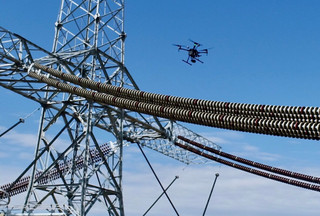
Drone deployment has shifted from an experimental "nice-to-have" to a baseline operational requirement for Tier 1 contractors. Platforms like the Matrice 350 RTK or the newer Matrice 4T are now regularly used to bypass the need for scaffolding entirely. An inspection that previously required a three-man crew and two days of site prep can now be completed in under forty minutes.
The financial shift is stark. When you factor in the reduction in insurance premiums—linked to a lower "boots off the ground" risk profile—and the removal of heavy plant hire, the ROI on a professional drone fleet often hits 200% within the first six months. You aren't just saving money on the day. You are stripping away the logistical friction that keeps your best engineers stuck in vans instead of analyzing data.
Weather-Proofing the UK Grid
Operating in 2026 means navigating a UK climate that is increasingly unpredictable. Utility assets don't wait for a clear blue sky to fail, which makes the IP55 rating on modern enterprise hardware non-negotiable. Whether it is a coastal wind farm in Scotland or a water treatment works in the rainy Midlands, your kit needs to handle the ingress of dust and driving rain without a trip to the repair shop.
-
Thermal Diagnostics: High-resolution sensors like the Zenmuse H30T allow pilots to spot "hot spots" on insulators or transformers from 50 metres away.
-
Sub-Millimetre Detail: 112x zoom capabilities mean you can check for hairline cracks in concrete or corrosion on bolt heads without getting dangerously close to high-voltage lines.
-
Repeatable Missions: RTK (Real-Time Kinematic) positioning ensures that every six-monthly check follows the exact same flight path, making it easy to overlay imagery and track asset degradation over time.
The 2026 Regulatory Landscape
Compliance is the invisible pillar of any utility drone programme. With the January 2026 updates to CAP 722 and the mandatory implementation of Remote ID for UK class-marked drones, "cowboy" operations are a thing of the past. Professional utility managers now demand full transparency in pilot currency and airworthiness logs to satisfy the new CAA audit requirements.
This is where the administrative burden can kill your efficiency. Managing a fleet of twenty drones across ten different sites requires more than a spreadsheet. Dronedesk handles the heavy lifting here, enabling you to track battery cycles and maintenance schedules for your heavy-lift rigs while keeping your GVC and Operational Authorisation records ready for an inspector’s visit.
Moving to Data as a Service (DaaS)
Raw photos are a liability; actionable reports are an asset. The industry is moving away from simply "taking pictures" and toward a Data as a Service model. Utility managers don't want to sift through 500 JPEGs of a pylon. They want a PDF that highlights the three rusted brackets that need replacing before winter.
By using automated flight paths and AI-driven defect recognition, drone teams are delivering 3D "digital twins" of entire substations. These models allow stakeholders to walk through a site virtually, measuring distances and planning upgrades from an office in London rather than a muddy field in Yorkshire. It is about making the data work as hard as the hardware.