
Apr 8, 2026
Discover why UK police forces are swapping the H20T for the Zenmuse H30T to save costs on NPAS and find missing persons faster.
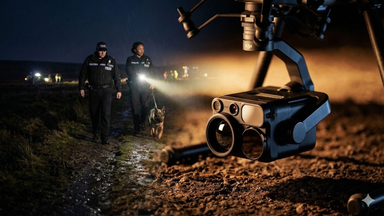
The National Police Air Service (NPAS) helicopter is a vital asset, but at roughly £3,500 per flight hour, it is an expensive way to find a missing person in a suburban park. In 2026, the strategic shift among UK forces is clear: deploy the drone first. With the arrival of the Zenmuse H30T, the capability gap that once mandated a helicopter for night missions has effectively closed.
The 0.5 Lux Challenge: Finding the Invisible
In a recent operational trial, a Force drone unit was tasked with locating a vulnerable person in dense woodland under 0.5 lux conditions. Historically, this required thermal-only "white hot" blobs that could easily be confused with livestock. The H30T changed the narrative. Using its full-colour night vision and 48MP starlight sensor, the pilot provided a high-definition, colour-accurate feed that allowed the ground team to identify the individual by the colour of their jacket—something impossible with the older H20T.
The integration of the NIR (Near-Infrared) auxiliary light meant the drone could illuminate the scene for the pilot without alerting the subject or creating a "light show" that might escalate a sensitive situation.
400x Zoom: Intelligence from 1.5km Away
Tactical surveillance in 2026 relies on staying outside the "bubble of awareness." The H30T features a 34x optical zoom and a staggering 400x digital zoom, allowing operators to read a vehicle registration or identify a suspect from over 1.5 kilometres away.
This standoff capability is backed by a 3000m laser rangefinder.
Operational ROI: Cutting the NPAS Bill
The business case for the H30T is simple: one successful drone mission can save the equivalent of three months of drone equipment depreciation. Recent reports suggest that UK law enforcement could save over £22m annually by transitioning specific NPAS operations to drone-in-a-box or high-end enterprise payloads like the H30T. It isn't about replacing helicopters entirely; it is about ensuring that the £3.5k-per-hour asset is only used when it is truly needed, while the £15k-per-year drone handles the daily "bread and butter" searches.
Dronedesk Integration: Closing the Compliance Loop
Real-time data needs a rock-solid audit trail to be legally defensible. While the H30T feed is pushed to the Force Control Room via DJI FlightHub 2, Dronedesk sits at the heart of the operational management. Before the props even spin, the pilot uses Dronedesk to pull live METARs and NOTAMs, ensuring the search area doesn't conflict with local FRZs or temporary air restrictions.
Post-incident, the value of the H30T data is protected by Dronedesk’s automated logging. It maps the flight path, records the specific airframe used, and tags the mission against the pilot’s GVC currency. If the Crown Prosecution Service (CPS) requires proof of pilot competency or a record of the flight conditions during the evidence gathering, you can generate a full, professional report in two clicks. It moves the tech from a "cool gadget" to a fully integrated, audited public safety tool that satisfies both the CAA and the Home Office.
Upgrade Your Tactical Capability
The H20T was a pioneer, but in 2026, it is a legacy sensor. To maintain the highest standards of public safety and operational efficiency, the move to 1280x1024 thermal resolution is no longer optional.
Ready to see the difference for yourself?